
STEP 1 Locate your meter can, generally found towards the front of a property, near the street. The can is typically in a direct line with the main outside faucet. It is housed in a "can" which is usually a large diameter, hard plastic type of tubing. Remove the lid to access the meter.
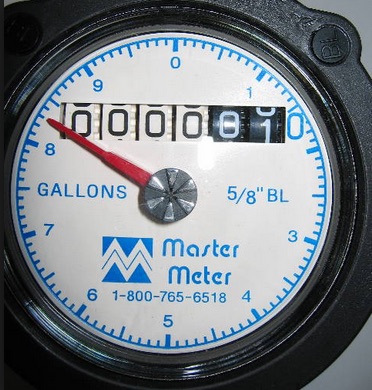
STEP 2 Once you open the meter can lid, lift the protective cap on the meter. On the face of the meter, there is a large dial and a display of numbers. For the residential meter, each rotation of the dial measures 10 gallons. Read the number display from left to right. Be sure to include the stationary zero. This is your meter reading. Meters measure water in gallons or cubic feet. Charges for the amount of water consumed are rounded to the nearest thousand gallons or hundred cubic feet used during a billing period. Compare that reading to what your bill states as your current or present reading.
STEP 3 Keep in mind that you might be checking your meter on a date different from the one used for billing. This could result in a difference in the amount you find, compared with the amount on which your bill is based. However, if your reading is considerably higher than what is on your bill, check for a leak or try to determine the source of large water use. Check the "leak indicator" aka Slow Flow dial to check for a leak. This is usually a small triangle or gear near the dial on the meter. If there is no water being used and the gear is turning (sometimes it turns very slowly- watch it for a few minutes), that means water is flowing somewhere. Check for seeping toilets or dripping faucets.
If your reading is significantly lower than the reading on your bill, please contact us and let us assist you in determining the problem.
 Our Meters